
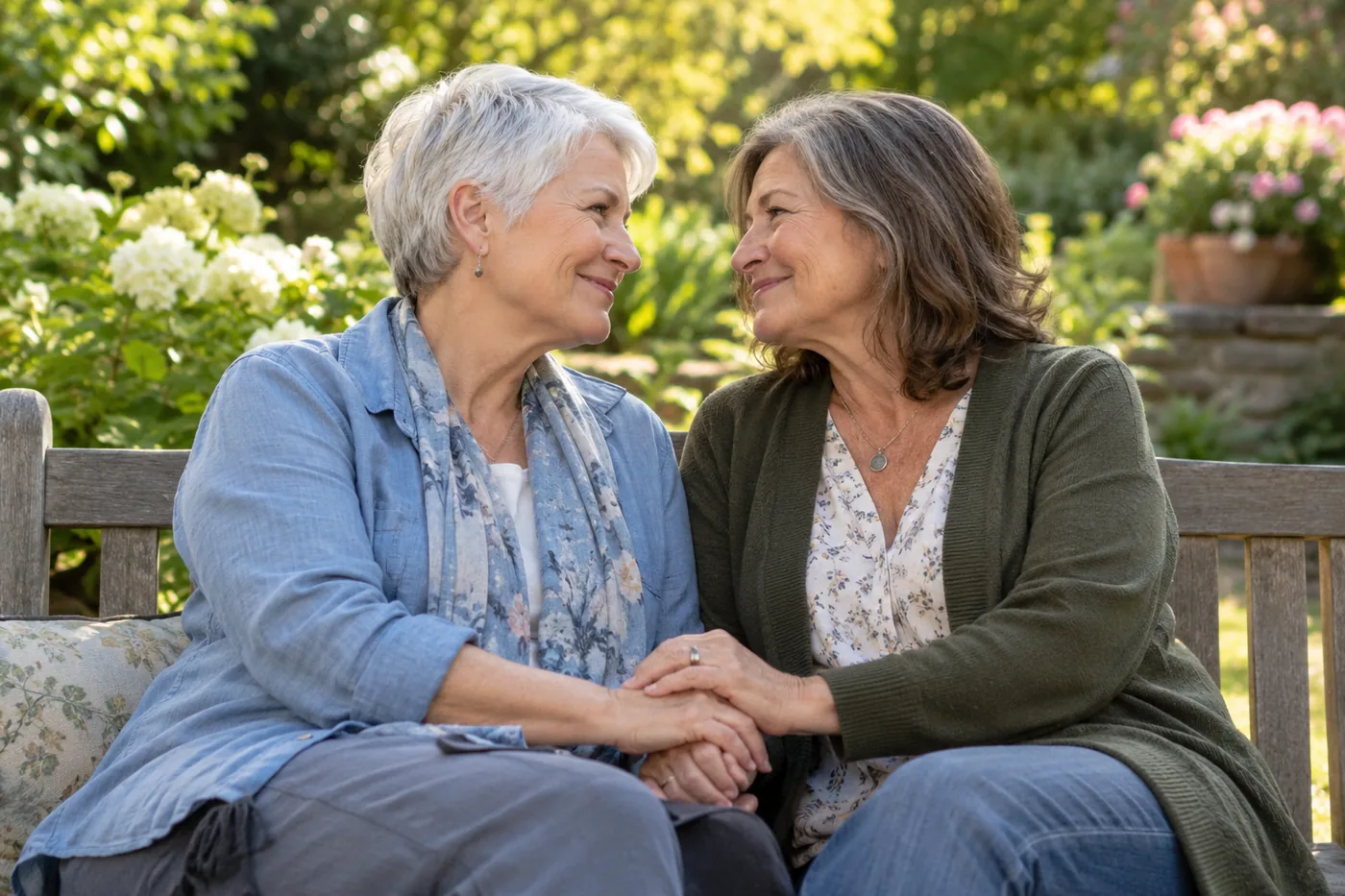
Different Relationship Histories Can Welcome the Same Attraction
Lesbian senior dating is an invitation to meet women as potential romantic partners, with your own preferences and history welcome in the conversation. You may want a long-term relationship, a first romance with a woman, or companionship that includes affection and attraction. The important thing is that both people understand the invitation.
Dating over 50 does not require one history of identity or relationships. Some women have spent decades in lesbian communities; others are beginning to explore a part of themselves they previously kept private. You can respect those differences while choosing a partner whose availability and intentions fit your life.
The wider LGBTQ+ senior dating conversation provides an inclusive starting point. Here, the focus is the experience of two women discovering whether they want to date each other. Friendship, community, and shared experience can support that connection, but romance deserves its own clear place rather than being left to implication.
Make the Romantic Invitation Understandable
Warm conversation can mean friendship or attraction, and neither woman should be expected to read the other's mind. If you are interested romantically, offer enough clarity that the other person can answer honestly. Being direct does not require a dramatic declaration.
‘I have enjoyed our conversations and would like to take you on a date. Would that interest you?’
‘I am attracted to you. I would like to know whether you feel something similar, without making our friendship uncomfortable.’
‘I am enjoying getting to know you romantically, even though I prefer to take physical affection slowly.’
If the answer is friendship, decide whether that is something you can enjoy without privately waiting for the person to change her mind. Friendship-first dating works when both understand the possibility being explored. It does not work well when one person believes a romance is underway and the other thinks they have met a new friend. Clear language protects the pleasure of either outcome.
Give Different Coming-Out Histories Equal Respect
A coming-out history can explain part of someone's experience without measuring her ability to love. Avoid treating years of public identity, previous partners, or an earlier marriage as proof of whether a woman belongs. Ask about the relationship she can offer now.
Someone newly dating women may need time to find language for her preferences. That does not make her a child or entitle another woman to direct her choices. Conversely, an experienced partner does not have to accept being hidden indefinitely or become responsible for managing every difficult conversation.
Discuss openness through situations rather than labels. Can you be introduced to friends as dating? Are photographs shared only by agreement? What would happen if you met an acquaintance while together? A woman may have good reasons for privacy, and her date may have an equally real need for acknowledgment. A workable relationship respects both instead of assuming the more experienced person must absorb every compromise.
Keep Community Connections from Running the Relationship
Overlapping social circles can make introductions easier and privacy more complicated. You may know some of the same friends, have attended the same events, or discover a connection to a former partner. None automatically makes dating impossible, but the two of you should decide what is shared.
A useful early boundary is to keep developing feelings and private disagreements between the people involved, rather than asking mutual friends to interpret every message. You can still have trusted support. The distinction is between confidential perspective and turning a small community into an audience for your romance.
If a date is friendly with an ex, ask about the present relationship rather than assuming ongoing romantic interest. Long histories can include friendship, shared responsibilities, or a mutual circle. Look for honest boundaries and consideration. You are entitled to information that affects your relationship; you are not entitled to a detailed account of another woman's private life simply because your circles overlap.
Discuss Chosen Family and Existing Commitments
Chosen family, relatives, close friends, and former partners may all have important places in a woman's life. Find out what those connections actually involve. A weekly dinner, an annual holiday, and ongoing caregiving are different commitments, even when each person is described as family.
Tell a date how a partnership might enter that existing network. You may want someone comfortable joining gatherings, or prefer to build the relationship privately before introductions. There is no requirement to combine social lives immediately. A mature romance can grow through gradual, deliberate inclusion.
Also ask what couple time would look like. A relationship becomes difficult when every available evening is allocated elsewhere and the new partner is expected to be endlessly flexible. You do not have to reduce long-standing bonds to make romance possible, but you do need to offer something concrete. Two women can each value independence and still reserve reliable time, attention, and affection for each other.
Let Desire and Boundaries Develop Together
Desire is allowed to be part of lesbian dating after 50. You can want physical attraction, flirtation, affection, and sexual intimacy without knowing immediately how quickly each will develop. Your date's wishes may unfold differently. Ask and listen rather than assuming shared gender means identical comfort.
Every step can have its own answer. Enjoying a kiss does not decide whether to stay overnight; being exclusive does not automatically settle household plans. Clear boundaries can make attraction easier because neither woman has to guess whether enthusiasm will be treated as a blanket agreement.
A slower relationship is not necessarily less romantic. Dating at your own pace can include explicit attraction, regular meetings, and steady interest. If you prefer more contact or physical closeness, say so kindly and discover whether there is a fit. Compatibility involves both desire and a relationship rhythm, rather than one person continually waiting or feeling hurried.
Use the identity terms each woman chooses for herself. Some women use lesbian, some use bisexual or another description, and some prefer to explain their attraction without a fixed label. You can be clear about wanting to date women without policing another person's language. The relevant questions remain whether attraction is mutual and whether the relationship each can offer fits.
Move from Mutual Interest to an Actual Relationship
When interest is mutual, give it a place in ordinary life. A second date, a shared weekend afternoon, or a conversation about seeing each other regularly can reveal more than weeks of increasingly intimate messages. Choose an activity that allows you to notice both attraction and ease.
After several meetings, ask whether the connection is moving in a direction both want. You can discuss exclusivity without promising cohabitation, or acknowledge that you are enjoying romance without deciding on marriage. If age and life stage shape your choices, dating over 60 includes many ways to build a substantial relationship.
Look for a woman who can be curious about your history without reducing you to it, express her interest without pressure, and make room for your own voice. Begin with an honest romantic invitation. The relationship that follows should be recognizable to both of you as something you are choosing together.